Recycling and Sustainability at Canary Wharf Storage
 Canary Wharf Storage is committed to making storage more responsible, practical, and environmentally aware through a clear focus on recycling, sustainability, and lower-impact operations. In an area shaped by dense commercial activity, residential growth, and fast-moving logistics, even small improvements can make a meaningful difference. Our approach is built around reducing waste sent to landfill, supporting local reuse networks, and lowering the environmental footprint of everyday storage movements. We aim to achieve a minimum recycling rate of 90% for recoverable materials handled through our operations, with continual review of how we sort, separate, and process waste streams.
This commitment covers a wide range of materials commonly seen in storage environments: cardboard, plastics, metal shelving components, wooden pallets, paper, and soft furnishings where suitable recovery routes exist. We also encourage careful separation at source, which helps improve recycling quality and supports the borough-level approach to waste management seen across East London. By keeping recyclable material out of mixed waste wherever possible, Canary Wharf storage sustainability becomes a practical part of everyday service rather than an afterthought.
As part of our wider environmental strategy, we work with approved local transfer stations and waste facilities that can handle separated waste responsibly. These facilities play an important role in the regional recycling network, helping ensure that materials from storage clear-outs, packaging waste, and operational refurbishment are directed to appropriate recovery streams.  Where borough collection systems require different sorting for paper, mixed dry recycling, food waste, and residual waste, we align our internal procedures to reflect those standards. That means our recycling process supports local infrastructure rather than working against it.
Canary Wharf and neighbouring boroughs have increasingly strong expectations around waste separation, with many recycling programmes organised by material type and contamination control. In practice, this means our sustainability efforts include clear internal segregation for cardboard, shrink wrap, timber, and scrap metal, alongside careful handling of reusable items. We also look for opportunities to redirect clean, usable goods into donation streams before they ever become waste. This is especially important in a high-turnover environment where packaging and storage materials can accumulate quickly.
One key part of the Canary Wharf storage recycling approach is our partnership work with local charities and community organisations. Items that are still in good condition, such as office furniture, household goods, archive containers, and small equipment, may be passed on for reuse when appropriate. These partnerships support a circular economy by extending the life of products and reducing demand for newly manufactured replacements. The result is a more thoughtful cycle of use, reuse, and recovery that benefits both the community and the environment.
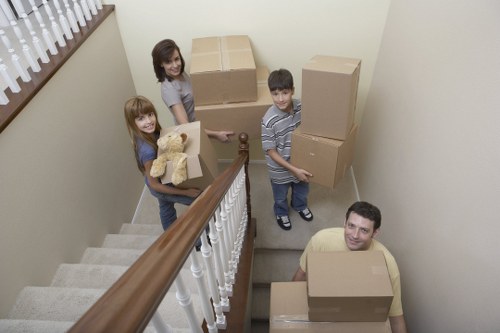 Charitable reuse is especially valuable in a business district where office moves, fit-outs, and seasonal changes can generate large volumes of unwanted but functional items. Rather than treating everything as waste, our team looks at the potential for repair, refurbishment, or donation. This includes working with organisations that specialise in redistributing items to families, schools, community groups, and social enterprises. Such partnerships help reduce pressure on landfill, cut disposal volumes, and give a second life to materials that still have value.
Transport is another area where sustainability matters. Our use of low-carbon vans is designed to reduce emissions associated with local collections, deliveries, and transfers. Where possible, we prioritise low-emission vehicles and efficient route planning to minimise unnecessary mileage across Canary Wharf, Tower Hamlets, and nearby districts. This supports a broader goal of reducing transport-related carbon output while maintaining the flexibility needed for storage operations in a busy urban setting.
Low-carbon fleet choices are paired with operational habits that keep journeys efficient: consolidating movements, planning multi-stop routes, and matching vehicle size to load requirements. By doing so, Canary Wharf Storage reduces fuel use and limits the environmental impact of routine business travel. These practical steps are especially relevant in an area where congestion, idling, and repeated short trips can all add avoidable emissions. A cleaner fleet helps align storage services with the low-carbon priorities increasingly expected in London.
We also review the materials used in packing, handling, and storage maintenance. Whenever suitable, we favour recyclable or reusable packaging options and work to reduce single-use materials. This includes encouraging the reuse of boxes where safe, separating plastic wrap for recycling, and choosing durable containers that can remain in circulation for longer. The aim is to make sustainable storage in Canary Wharf more than a slogan by building environmental care into the way items are packed, moved, and stored.
 Waste reduction is not only about what happens after an item is no longer needed; it begins with prevention. We look for ways to avoid over-ordering packing materials, reduce unnecessary disposables, and improve sorting so fewer recoverable items are lost to residual waste. This is particularly important in boroughs that depend on clean separation to achieve high recycling performance. By following those principles, we support local waste systems and help keep valuable resources in circulation for longer.
Our environmental approach is also shaped by the needs of customers who want responsible storage choices. Businesses, households, and organisations increasingly want to know that their storage provider is taking recycling and carbon reduction seriously. From using approved transfer stations to supporting charity donation pathways, every step is designed to improve the lifecycle of materials. This creates a service model where recycling at Canary Wharf Storage is integrated with wider sustainability goals rather than handled in isolation.
 Looking ahead, Canary Wharf Storage will continue working towards stronger circular practices, a higher recycling percentage, and lower-carbon operations across the board. By combining local transfer station use, charity partnerships, waste separation aligned with borough expectations, and low-carbon vans, we are building a storage service that is practical today and more sustainable for tomorrow. Our goal is simple: to manage storage responsibly while helping protect the environment that surrounds it.